
Published 4 Mar 2024 · Last reviewed 11 Nov 2026
US automotive parts technology platform
Migration from OroCRM to Salesforce with live data sync
Duplicate data stopped, cases categorized, and platform and Salesforce kept in sync, as reported in 2024
Client
US automotive parts technology platform
Industry
Technology and software
Salesforce products
Sales Cloud, Service Cloud
Integration
Client platform (batch and trigger sync)
Delivered by
Techila Global Services, Salesforce Summit Partner
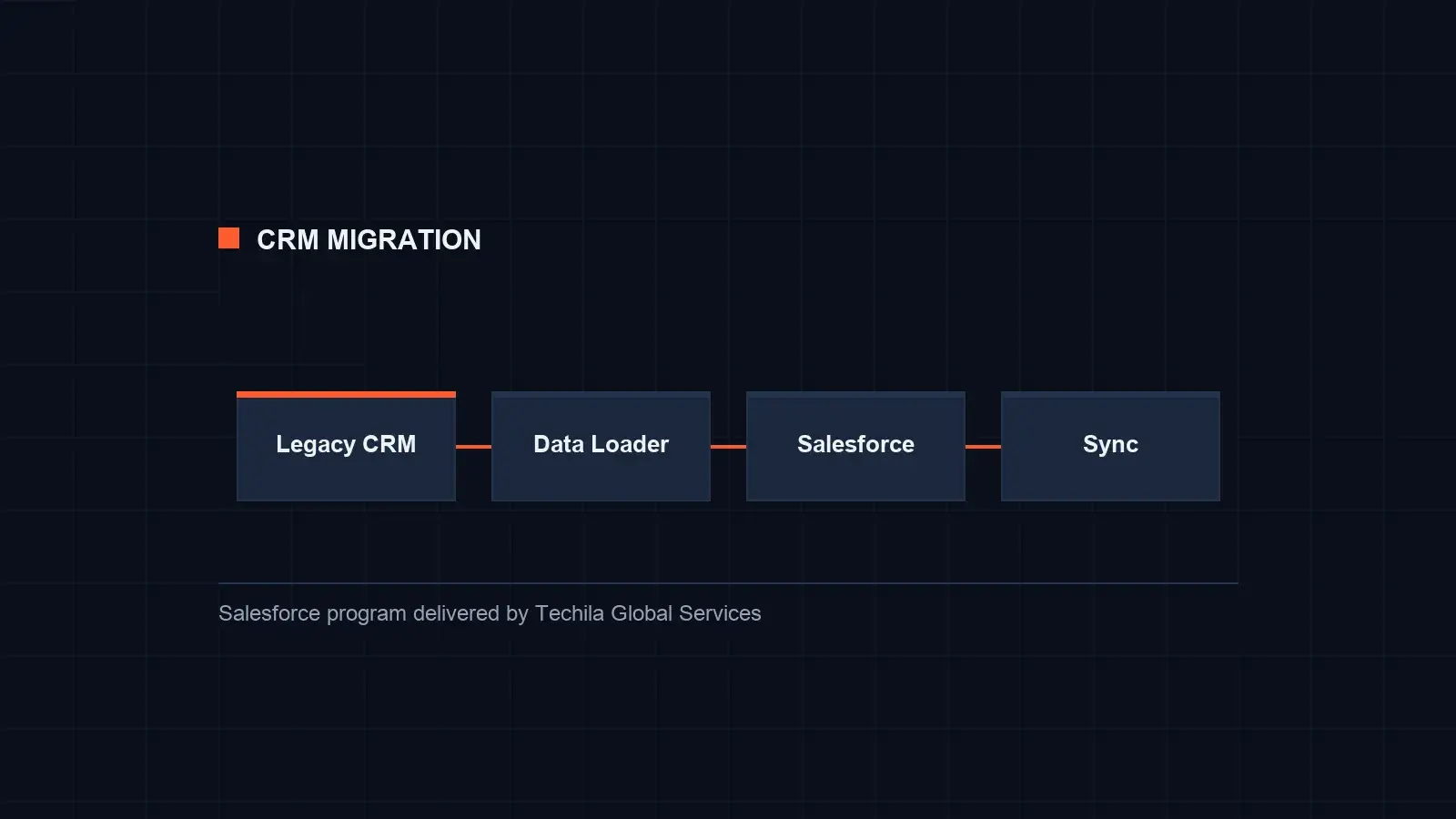
Techila Global Services, working with a partner agency, moved a US automotive parts technology platform from OroCRM to Salesforce. Existing data was migrated with Data Loader, scheduled batches and triggers keep the platform and Salesforce in sync, duplicates stopped, cases can be categorized, and the onshore team received full deployment and data-model documentation.
The client is a US automotive parts technology platform. Techila Global Services, a Salesforce Summit Partner, delivered the migration with a partner agency and handed over to its onshore team. For the method, see our guide to Salesforce data migration strategies. Source: original Techila case study, published 4 March 2024 (archived copy reviewed 11 November 2026). The client name is withheld pending permission.
At a glance
- Scope
- OroCRM to Salesforce migration, platform sync, case management, documentation and handover
- Original case study
- Published 4 March 2024; refreshed 11 November 2026
- Provider
- Techila Global Services · Salesforce Summit Partner, with a partner agency
The challenge
The platform managed customer data in OroCRM, where cases were not handled well, the data model created duplicates, customization was hard and there was no way to categorize cases for a sorted view.
Cases were not handled properly in OroCRM.
OroCRM's data model limitations created duplicate data.
OroCRM was not flexible enough for customization.
There was no way to categorize cases for a sorted view.
The solution
Techila connected the platform to Salesforce, built batches and triggers to keep the two systems in sync, moved existing OroCRM data into Salesforce with Data Loader, used declarative configuration wherever possible, managed code versions in Bitbucket and documented deployment and the data model for the onshore team.
Set up a connection between the client's platform and Salesforce.
Built batches and triggers that sync data between the platform and Salesforce on a schedule.
Migrated existing OroCRM data into Salesforce with Data Loader.
Used declarative configuration wherever possible to keep the solution readable and maintainable.
Managed code versions in Bitbucket and delivered deployment and data-model documentation to the onshore team.
Salesforce products used
Results
The original March 2024 case study reported qualitative outcomes only: time saved, duplicate data resolved, cases managed in Salesforce, and the platform and Salesforce kept in sync.
Duplicate data issues resolved
Cases managed and categorized in Salesforce
The platform and Salesforce kept in sync automatically
Related reading
- Salesforce data migration strategies: Techila's migration guide.
Related services
How Techila delivers this for your team
FAQ
Frequently asked questions.
What buyers ask after reading this Techila case study.
Existing records were migrated with Data Loader, and scheduled batches and triggers keep the client's platform and Salesforce in sync after go-live. Our data migration guide explains the general method.
Techila delivered the build with a partner agency: the connection, sync, migration and case setup, plus deployment and data-model documentation for the onshore team.
Techila names clients on its website only with their permission. This case study will name the client once that is confirmed.

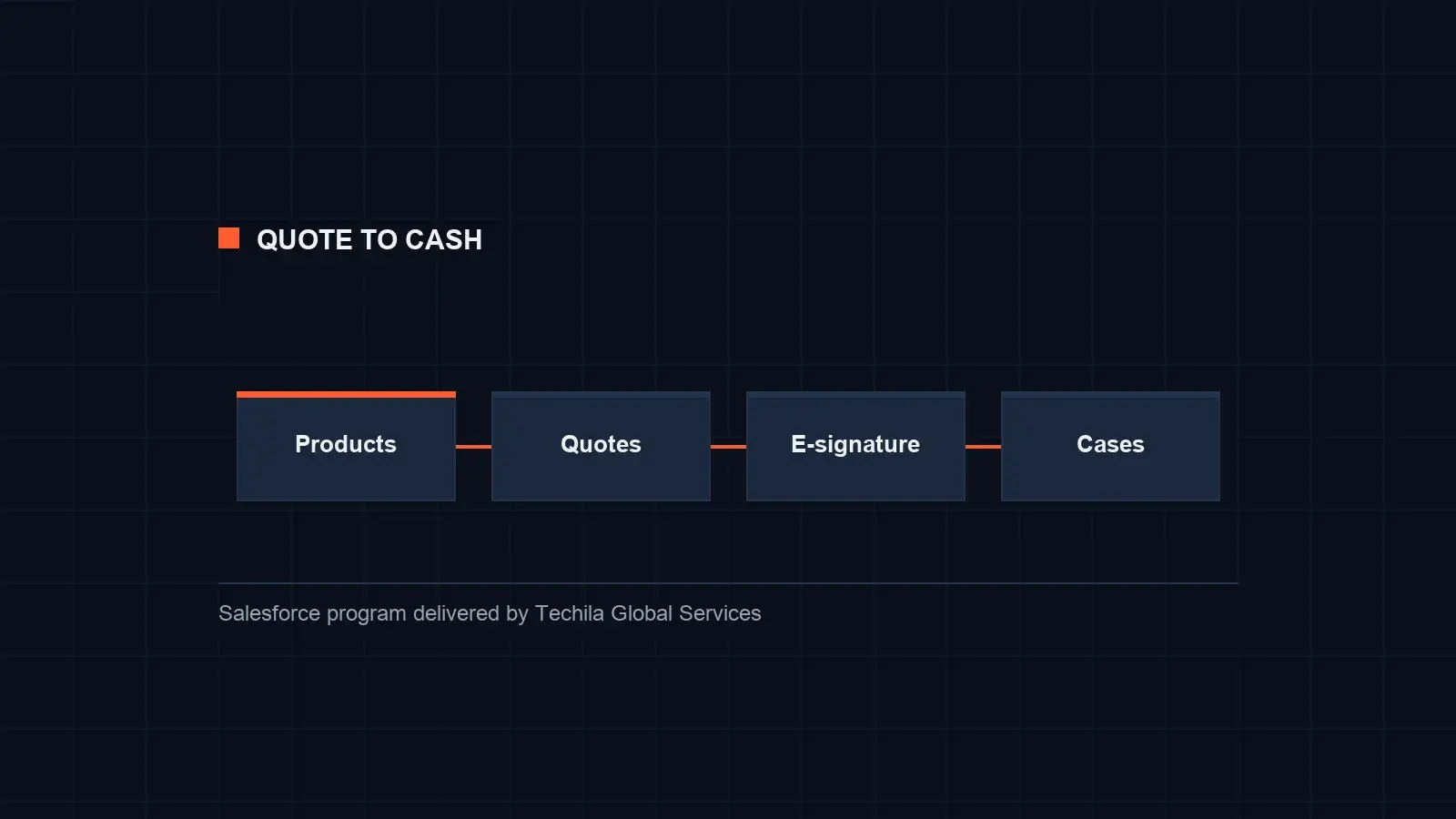
Talk to an expert about US automotive parts technology platform
Tell us what you need. We reply within 1 business day.